
The importance of (sometimes shameless) self-promotion
In the times of instantaneous information via social media, waiting around to read our folders or for our paper to get published is no longer the only way to get our science out there.
In the times of instantaneous information via social media, waiting around to read our folders or for our paper to get published is no longer the only way to get our science out there.

Usually, when researchers lead a school activity about oysters, they’d bring students to the lab to dissect an oyster or demonstrate how oysters can filter water. But since in-person gatherings weren’t possible, graduate students Kaitlyn Clark and Annie Schatz got creative while teaching a Hampton University TRiO Educational Talent Search lesson.
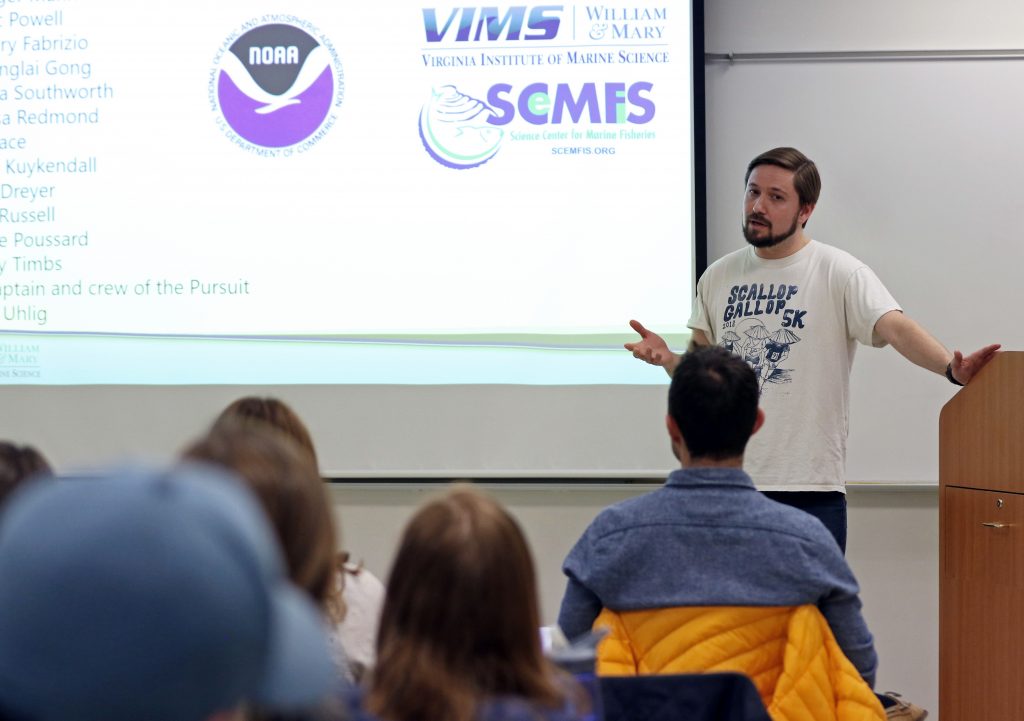
As a Knauss Fellow working with the NOAA’s chief data officer, Chase Long worked on the data management strategy for the agency. During his fellowship, Long learned about recent federal policies driving NOAA’s efforts to make their data FAIR—findable, accessible, interoperable, and reusable—like the Big Data Project.
The researchers tracked how each of the 16 OysterFutures participants rated the model for three different factors: its reliability, its legitimacy, and its usefulness as a tool.